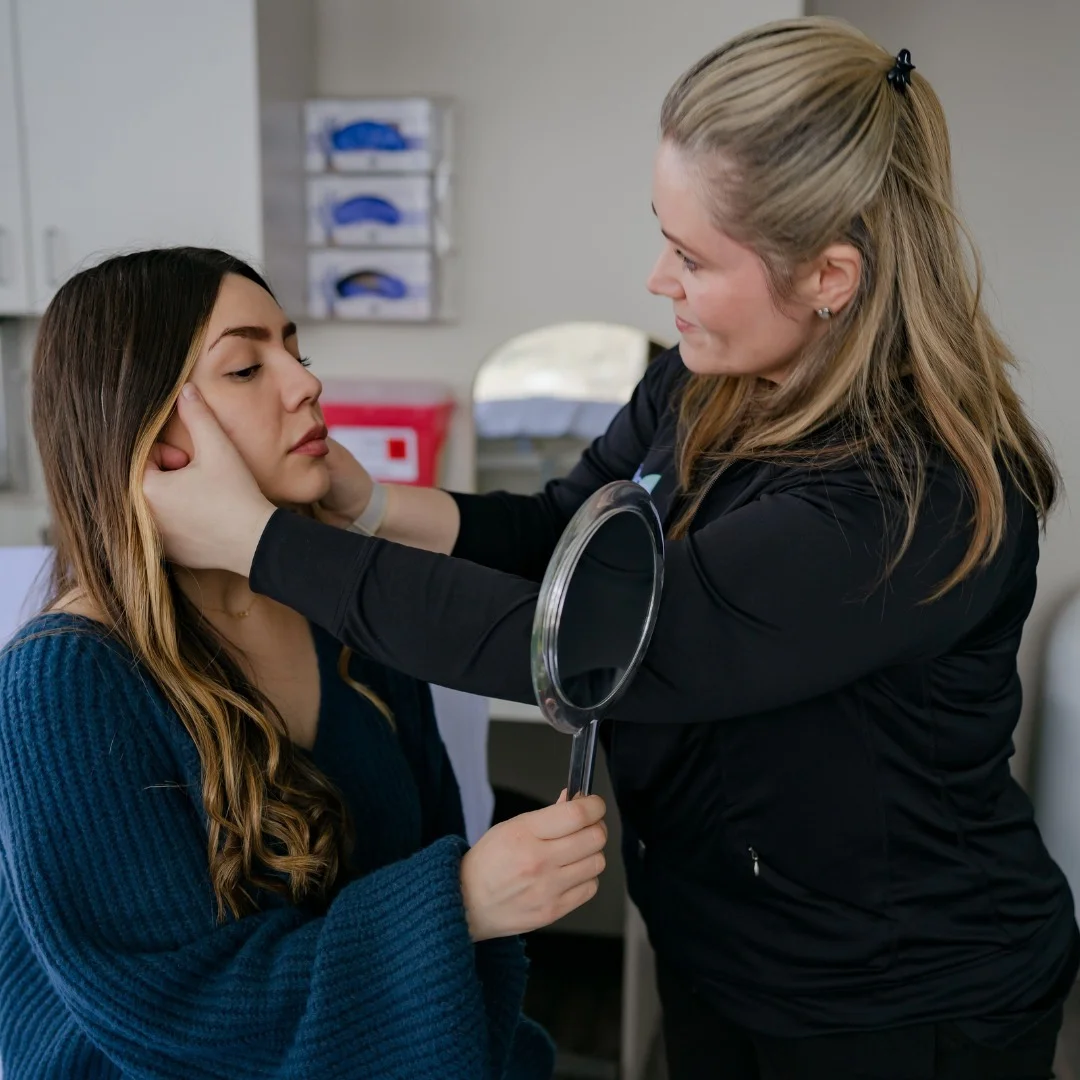
Skin cancer is the most frequent cancer diagnosed in the United States, and one in every five people will develop skin cancer by age 70. Prevention and early detection are the most effective ways to reduce the impact of this disease. At AboutSkin Dermatology and Aesthetics, Dr. Cohen encourages patients in Greenwood Village, CO, to schedule yearly exams so he can monitor their skin health and provide timely medical care when needed.
Skin Cancer and Its Risks
Skin cancer develops when abnormal skin cells grow and divide uncontrollably, often triggered by cumulative ultraviolet (UV) exposure from the sun or tanning devices. While some forms of skin cancer grow slowly, others can spread more quickly and require earlier medical attention. Risk increases with factors such as a history of sunburns, long-term sun exposure, fair skin, a high number of moles or a personal or family history of skin cancer.
Routine dermatology exams are performed systematically to look for patterns or changes that may not be obvious to patients. These exams focus on identifying new lesions, monitoring existing spots, and noting changes in size, color, shape or texture. Earlier diagnosis often allows for a broader range of management options, and regular evaluations also create a clinical record that makes it easier to recognize changes that may signal increased risk.
What Is an Annual Skin Exam?
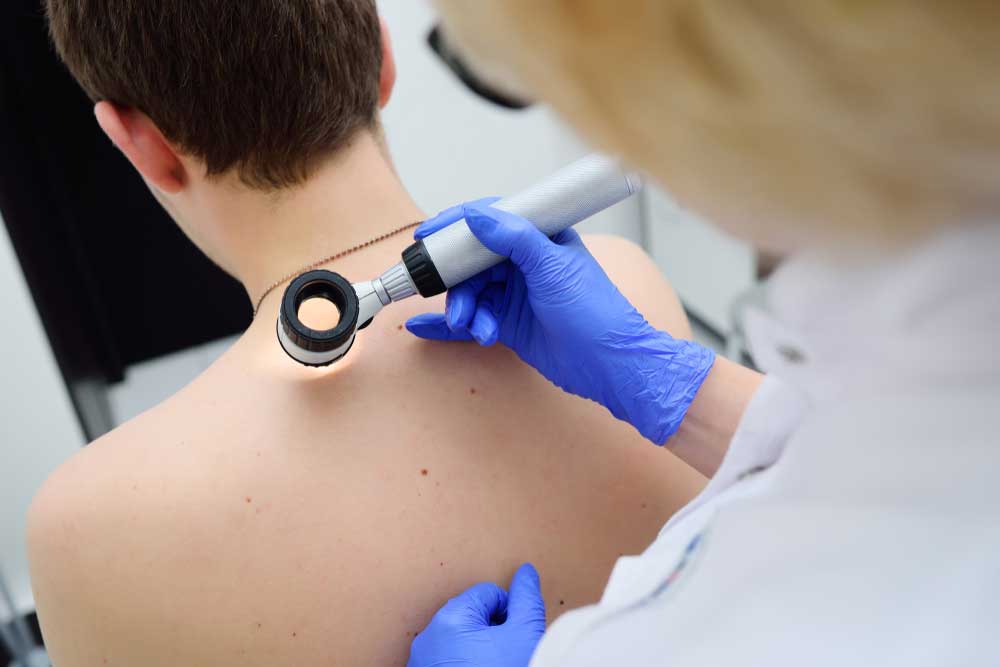
An annual skin exam is a scheduled medical evaluation in which a Board Certified Dermatologist examines your skin from head to toe under proper clinical lighting. The exam includes areas that are difficult to assess on your own, such as the scalp, behind the ears, the soles of the feet and between the toes. You may be asked about recent skin changes, sun exposure history, medications and any personal or family history of skin cancer.
During the visit, your dermatologist may use tools like a dermoscopy to examine pigmented lesions more closely and document any findings to compare later. Suspicious areas may also be photographed or measured, and if a lesion warrants further evaluation, you will get detailed information about the next steps.
Early Detection and Survival Rates
Early detection has a major impact on long-term outcomes. When melanoma is found while still confined to the skin, the five-year relative survival rate is nearly 100 percent, but this rate drops sharply when the cancer spreads to regional tissues or distant sites. An annual skin check increases the likelihood of detecting spots while they are still localized.
The ABCDEs of Concerning Moles
Asymmetry
A mole is considered asymmetric when one half does not match the other in shape, thickness, or overall appearance. Benign moles tend to look balanced when divided down the middle, while concerning lesions may appear uneven or irregular. Asymmetry alone does not confirm a diagnosis, but it raises a clinical red flag when seen alongside other changes.
Border
The border refers to the outer edge of a mole. Smooth, even edges are more typical of benign lesions, while borders that appear irregular, scalloped, blurred or poorly defined may be more concerning. Borders that change over time or appear different from surrounding moles are also noted during an exam.
Color
Most benign moles have a single, uniform color, such as tan or brown. Lesions with multiple colors, including varying shades of brown, black, red, white or blue, are evaluated more closely.
Diameter
Size is another factor we consider, as lesions larger than about 6 millimeters (roughly the size of a pencil eraser) may be concerning. Smaller lesions can still be clinically significant if they show other concerning features. Diameter is assessed in combination with shape, color and change.
Evolving
Evolution refers to any change in a mole over time, including growth, color shift, change in shape or new symptoms such as bleeding or crusting. A lesion that appears dissimilar to a patient’s other moles or behaves differently than it did in the past is examined more closely.
Warning Signs You Should Never Ignore
- New moles or growths appearing after adulthood
- Sores that don’t heal or that bleed easily
- Lesions that itch, hurt or crust over
- Changes in existing moles or spots
- Spots that look different from others on your body (the “ugly duckling”)
Caring for Your Skin in Between Exams
Monitoring your skin between appointments is also helpful for early detection. You can check your skin once a month in good lighting using a full-length mirror and a hand mirror to view hard-to-see areas like your back and scalp. Make note of any new growths that you notice during your skin check or existing spots that have changed.
Prevention is the best way to avoid complications from skin cancer. Limit UV exposure by wearing sunscreen every day, even if you plan to be inside. In the sun, use protective clothing and hats. We also recommend avoiding tanning beds.
When to Schedule an Exam Sooner
You do not need to wait for your annual appointment if you notice a new or changing lesion, a sore that won’t heal, or a spot that bleeds, itches or becomes tender. These changes may not be serious, but they are worth having evaluated sooner rather than later. If you have had skin cancer before or have a higher risk due to personal or family history, you may need more frequent exams. When in doubt, schedule a visit.
Meet the Board-Certified Dermatologists at AboutSkin
At AboutSkin Dermatology and Aesthetics, your annual skin exam is performed by one of our Board-Certified Dermatologists, each trained to detect the earliest signs of skin cancer and other dermatologic concerns. The practice is led by Dr. Joel L. Cohen, who is internationally recognized for his contributions to dermatology. He has authored hundreds of peer-reviewed medical articles and textbook chapters, co-authored three textbooks used by dermatologists worldwide and has been named a Top Doctor by U.S. News & World Report. That commitment to clinical excellence extends to every provider on our team.
Dr. Samantha Stoler has been with the practice since 2011 and provides medical, surgical and cosmetic dermatologic care to patients of all ages. A fellow of the American Academy of Dermatology and member of the American Society for Dermatologic Surgery, Dr. Stoler completed her residency at Cook County Hospital in Chicago and graduated magna cum laude from SUNY Downstate Health Sciences University, where she was inducted into the Alpha Omega Alpha (AOA) honor society. She is known for the strong relationships she builds with patients and their families, and she takes pride in addressing the skin health concerns specific to every stage of life.
Dr. Stephen Ho joined AboutSkin in 2012 after more than 12 years of practice in Boulder County. A fellow of the American Academy of Dermatology and a member of the Skin Cancer Foundation, Dr. Ho graduated summa cum laude from UCLA and completed his dermatology residency at the University of Illinois at Chicago, where he served as chief resident. He is a regular volunteer for free skin cancer screenings through the 9Health Fair and the Skin Cancer Foundation Road to Healthy Skin Tour, and he lectures on dermatology topics to internal medicine residents and primary care physicians in the Denver area.
Dr. Brooke Rothstein is a Board-Certified Dermatologist who completed her residency at Tufts Medical Center, where she was selected chief resident. During medical school, she dedicated a full year to clinical trial research for conditions including psoriasis, vitiligo and atopic dermatitis, and she has published multiple original research articles on medical and surgical dermatology topics. Dr. Rothstein is a member of the American Academy of Dermatology, the American Society of Dermatologic Surgery and the American Society for Laser Medicine and Surgery.
With this depth of training and experience across the team, patients at AboutSkin are always seen by a physician who knows what to look for.
Schedule Your Annual Skin Exam in Greenwood Village, CO
Skin changes can develop gradually, which is why consistent monitoring matters. A yearly exam helps document patterns and spot early signs of concern that may otherwise go unnoticed. To set up your next visit at AboutSkin Dermatology and Aesthetics, reach out through our website or call 303-756-7546. Dr. Cohen and his team of Board-Certified Dermatologists serve Greenwood Village, CO, and the surrounding areas.