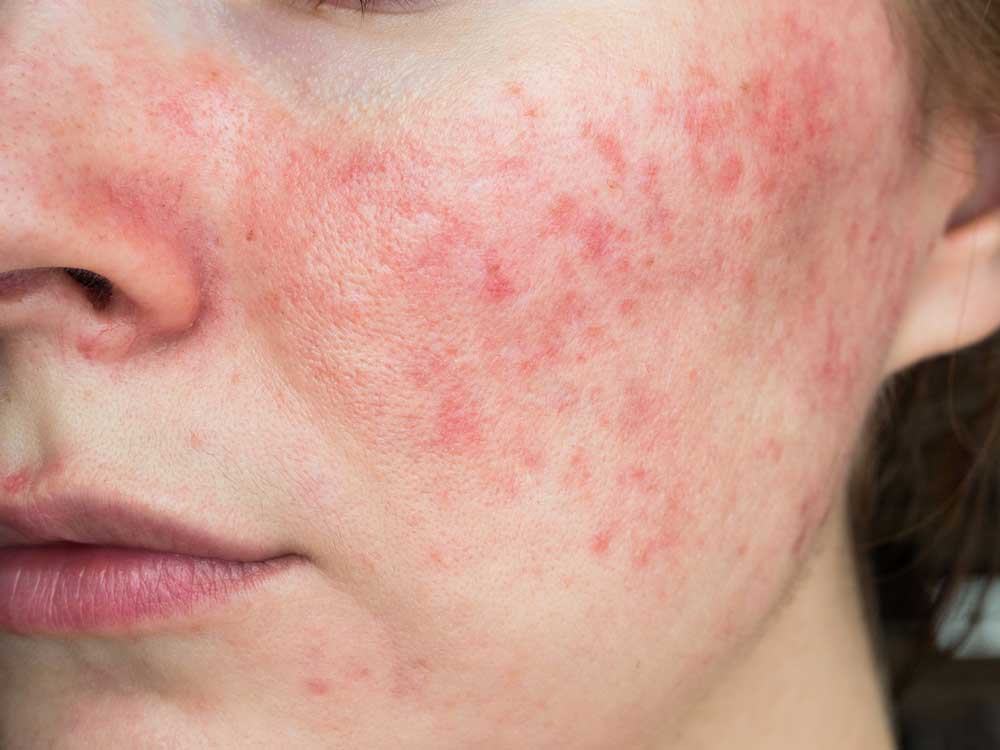
If your face flushes easily, stays red long after the trigger is gone or breaks out in bumps that look like acne but don’t respond to acne products, rosacea may be the reason. This chronic inflammatory skin condition affects an estimated 16 million Americans, and many more go undiagnosed because they assume the redness is just sensitive skin or a reaction to the weather.
At AboutSkin Dermatology and Aesthetics, our Board-Certified Dermatologists in the Denver area see rosacea regularly and understand how disruptive it can be. The condition tends to cycle through flare-ups and periods of calm, which makes it tricky to manage without a clear strategy. There is no cure for rosacea, but with the right combination of lifestyle adjustments and medical treatment, flare-ups can become less frequent and less severe.
What Rosacea Actually Looks Like
Rosacea shows up differently from person to person, which is part of why it’s so often misidentified. The most common signs include persistent redness across the central face (cheeks, nose, chin and forehead), visible blood vessels near the skin’s surface and small red bumps that may be mistaken for acne. Some patients also experience eye irritation, a condition known as ocular rosacea, and in rare cases, thickening of the skin around the nose.
Flare-ups can come with a burning or stinging sensation, and they don’t always have an obvious cause. That unpredictability is one of the most frustrating aspects of living with rosacea.
Common Rosacea Triggers (and How to Manage Them)
Understanding what sets off your rosacea is half the battle. While triggers vary widely from one person to the next, certain environmental and lifestyle factors show up repeatedly in clinical literature and patient surveys.
- Sun exposure is one of the most significant triggers. Colorado’s high altitude means stronger UV radiation year-round, so daily broad-spectrum sunscreen with SPF 30 or higher is essential. Mineral sunscreens containing zinc oxide or titanium dioxide tend to be better tolerated by rosacea-prone skin, as chemical filters can sometimes cause irritation.
- Temperature extremes and wind are also common culprits. Denver’s dry winters and fluctuating temperatures can aggravate rosacea considerably. Protecting your face with a scarf in cold weather and avoiding sudden transitions from cold outdoor air to heated indoor spaces can make a noticeable difference.
- Spicy foods, hot beverages and alcohol (particularly red wine) dilate blood vessels and frequently trigger flushing episodes. You don’t necessarily have to eliminate these entirely, but paying attention to which specific items cause a reaction for you is worth the effort.
- Stress and intense exercise can also provoke flare-ups through increased blood flow to the face. Stress management techniques and opting for shorter, moderate-intensity workouts rather than prolonged high-intensity sessions may help reduce this trigger.
- Harsh skincare products often worsen rosacea. Avoid products with alcohol, fragrance, witch hazel or abrasive exfoliants. A simplified routine with a gentle cleanser, a fragrance-free moisturizer and mineral sunscreen is a solid baseline for rosacea-prone skin.
Medical Treatment Options
When lifestyle modifications alone aren’t enough to control symptoms, prescription treatments can make a real difference. Dr. Joel Cohen is a Board-Certified Dermatologist and Director of AboutSkin Dermatology and Aesthetics who has authored over 324 medical articles and book chapters. He works with patients to determine which interventions are appropriate for their specific type of rosacea.
“Rosacea is not a one-size-fits-all condition,” says Dr. Cohen. “The treatment plan for someone with primarily vascular redness looks very different from someone dealing with inflammatory papules and pustules. Accurate subtyping matters.”
Topical and Oral Medications
For mild to moderate rosacea, topical prescription medications are frequently the starting point. Options include topical metronidazole, azelaic acid and ivermectin, each of which targets the inflammatory component of the condition. Brimonidine gel can temporarily reduce facial redness by constricting blood vessels, though it addresses the symptom rather than the underlying cause.
For more inflammatory forms of rosacea with persistent bumps, low-dose oral antibiotics like doxycycline (at an anti-inflammatory dose) may be recommended. These are typically used for a limited duration to calm active flare-ups before transitioning to topical maintenance therapy.
Laser and Light-Based Treatments
When rosacea involves persistent redness and visible blood vessels, particularly the erythematotelangiectatic subtype, laser and light-based therapies offer targeted treatment options that topical products can’t fully address.
Pulsed dye lasers (PDL) like Candela’s VBeam are considered the gold standard for addressing vascular lesions associated with rosacea. The VBeam laser uses a 595 nm wavelength that is precisely matched to the absorption peak of oxyhemoglobin, allowing it to target and collapse dilated blood vessels while leaving surrounding tissue intact. AboutSkin has extensive experience with this technology, and Dr. Cohen has published and lectured on laser treatment protocols for vascular conditions.
Cutera’s Excel V+ is another advanced vascular laser now available at AboutSkin for rosacea treatment. The system operates with two wavelengths: a 532 nm green laser for superficial redness and telangiectasia and a 1064 nm Nd:YAG for deeper vascular concerns. It also includes a Laser Genesis mode that delivers microsecond pulses to target the fine network of micro-vessels responsible for diffuse facial redness while stimulating collagen production. Dr. Cohen uses the Excel V+ alongside the VBeam to give patients more precise options depending on the type, depth and distribution of their vascular symptoms.
Intense pulsed light (IPL) and BroadBand Light (BBL) are additional options that deliver multiple wavelengths of light to address redness and visible vessels across broader areas of the face. These treatments are particularly effective for diffuse redness that covers a large surface area.
Multiple laser or light-based treatment sessions are typically needed for optimal results, and maintenance sessions may be recommended to manage rosacea long-term.
Building a Rosacea-Friendly Skincare Routine
Your daily skincare routine plays a bigger role in rosacea management than most people realize. The goal is to support the skin barrier without triggering inflammation.
Start with a gentle, sulfate-free cleanser that won’t strip the skin. Pat dry rather than rubbing, and apply a ceramide-based or hyaluronic acid moisturizer while the skin is still slightly damp. Mineral sunscreen should be the final step every morning, regardless of the weather or season. Niacinamide, a form of vitamin B3, has anti-inflammatory properties that are well-studied in the context of rosacea and is found in many dermatologist-recommended products, including the EltaMD UV Clear sunscreen available through the AboutSkin shop.
Introduce any new product one at a time and wait at least two weeks before adding another. Rosacea-prone skin is reactive, and layering too many new ingredients at once makes it impossible to identify what’s helping and what’s hurting.
When to See a Dermatologist for Rosacea
If over-the-counter products and lifestyle changes haven’t brought your rosacea under control, or if your symptoms are getting progressively worse, it’s time to see a Board-Certified Dermatologist. Early intervention matters with rosacea. Left unmanaged, the condition can progress to more severe stages that become harder to treat.
AboutSkin Dermatology and Aesthetics has been recognized as one of the World’s Leading Clinics and is home to a team of Board-Certified Dermatologists, including Dr. Cohen (named a 15x Castle Connolly Top Doctor and 12x Top Doctor by Denver’s 5280 Magazine). We offer comprehensive rosacea evaluation and treatment at our Greenwood Village office, serving the greater Denver area. Our practice maintains one of the most extensive collections of laser and energy-based devices in the region, which means your treatment plan can be built around the technology that is most appropriate for your symptoms rather than being limited to a narrow set of tools.
Whether you’re dealing with your first flare-up or have been managing rosacea for years, a thorough evaluation is the smartest place to start. AboutSkin also offers virtual consultations for patients who want to discuss their concerns before coming in.
Your Redness Has Met Its Match
Ready to get your rosacea under control with a team that actually understands the condition? Schedule a consultation with our Board-Certified Dermatologists at AboutSkin Dermatology and Aesthetics, or call 303-756-7546 to book your appointment.