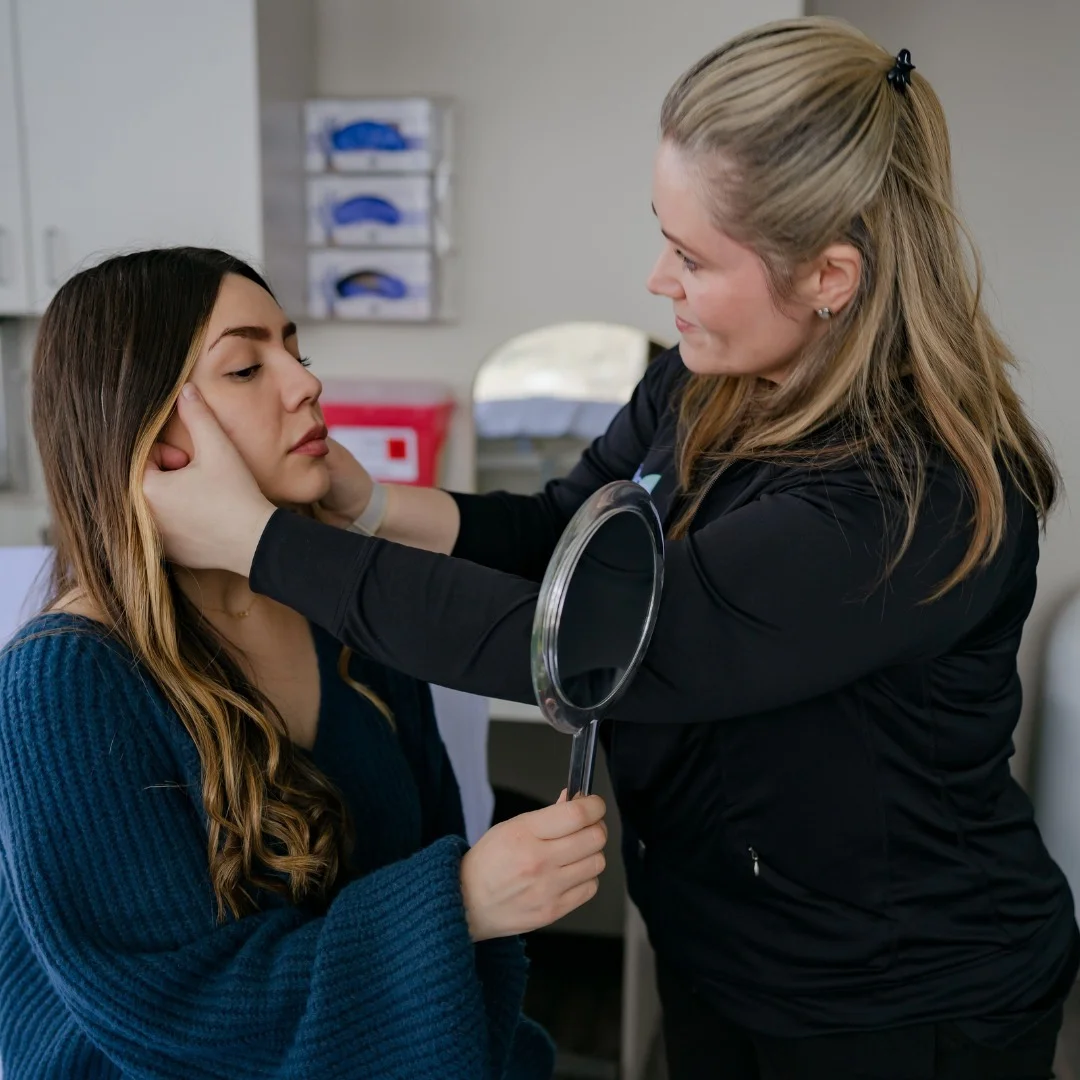
Most laser treatments ask you to make a tradeoff. You can go aggressive with an ablative laser and get dramatic improvement, but you’ll spend a week or more hiding out at home while your skin recovers. Or you can choose a gentler non-ablative option with minimal downtime, knowing you’ll need several rounds before you see real change.
The HALO hybrid fractional laser was designed to eliminate that compromise. It delivers two distinct wavelengths in a single pass, targeting damage on your skin’s surface while stimulating collagen production deep in the dermis. The result is a treatment that works on multiple levels of the skin simultaneously, with a recovery period most Denver patients find surprisingly manageable.
At AboutSkin Dermatology and Aesthetics, Dr. Joel Cohen was among the first researchers to publish clinical data on combining ablative and non-ablative wavelengths in one session. That early work helped lay the scientific foundation for the hybrid approach that HALO now uses. With over 324 published medical articles and recognition as a 15-time Castle Connolly Top Doctor, Dr. Cohen brings a level of laser expertise that few dermatologists in the country can match.
What Makes HALO® a Hybrid Laser?
The word “hybrid” matters here. Traditional fractional laser treatments use a single type of energy. HALO combines two.
The first is an ablative wavelength (2940 nm) that removes thin, damaged portions of the outermost skin layer. Think of it as controlled exfoliation at the microscopic level, clearing away sun-damaged cells, uneven pigmentation and rough texture so new skin can take its place.
The second is a non-ablative wavelength (1470 nm) that penetrates deeper without breaking the skin’s surface. This energy heats the underlying tissue and triggers a collagen-remodeling response, which is what produces the longer-term improvement in firmness and skin quality.
Because the laser treats only a fraction of the skin at a time, leaving surrounding tissue intact, healing happens faster than it would with a full-surface ablative treatment. The untreated skin around each microscopic treatment zone acts as a scaffold for recovery.
The Science Behind HALO®’s Two-Layer Approach
When the ablative wavelength vaporizes tiny columns of surface-level tissue, your body immediately begins replacing those cells. That is what produces the initial clarity, smoothness and reduced pigmentation you notice within the first week.
Meanwhile, the non-ablative wavelength creates thermal energy in the deeper dermal layers, where collagen and elastin live. That heat signals your body to produce new structural proteins, a process called neocollagenesis. This is why improvement continues for months after a single HALO session.
A multi-center clinical trial published in the Journal of Drugs in Dermatology found that 80% of study participants showed significant skin improvement on photographic analysis after hybrid fractional laser treatment, with a 100% patient satisfaction rate.
“The concept of combining two types of laser energy into one treatment session is something I published the first clinical study on,” says Dr. Cohen. “HALO takes that idea and builds it into one device, which gives us precise control over how aggressively we treat the surface versus the deeper layers.”
What Skin Concerns Does HALO® Address?
HALO is particularly effective for concerns tied to cumulative sun damage and photoaging. Living in Denver, where UV intensity is up to 30% higher than at sea level, makes this especially relevant for Colorado residents.
The treatment targets pigmentation irregularities, rough or uneven skin texture, visible pore size, fine lines and dullness. It can also address acne scarring and overall skin tone imbalances. For patients who have spent years accumulating sun exposure from skiing, hiking and the daily commute in Colorado’s high-altitude sunshine, HALO can begin to reverse some of that cumulative damage.
HALO® vs. Other Laser Resurfacing Options
Understanding where HALO fits among the laser resurfacing options at AboutSkin Dermatology and Aesthetics can help you have a more productive consultation.
| Feature | HALO® Hybrid Fractional | Ablative Fractional | Non-Ablative Fractional |
| Wavelengths | Two (ablative + non-ablative) | One (ablative only) | One (non-ablative only) |
| Primary targets | Pigment, texture, tone and collagen | Deep wrinkles, scars and severe texture | Mild texture, tone and gradual collagen stimulation |
| Typical downtime | Four to five days | Five to seven days | One to three days |
| Sessions needed | Two to three | One to two | Three to five |
| Surface repair | Yes | Yes | Minimal |
| Deep collagen work | Yes | Limited | Yes |
At AboutSkin, we maintain one of the largest collections of laser and energy-based devices in the Denver region, which means we are not limited to a single platform. If HALO is not the right fit for your skin type or goals, we have more than a dozen other laser and light-based options to consider.
And if lasers aren’t right for you, we can review other options from our array of minimally invasive cosmetic treatments for every need.
What Happens During a HALO® Treatment?
The process starts with thorough cleansing, followed by the application of a topical numbing cream. Once the anesthetic takes effect, the HALO handpiece is passed over the treatment area while a built-in motion-tracking system monitors coverage for even energy distribution.
You will feel warmth and a prickling sensation during the treatment. Our team uses the Zimmer Cryo cooling system to deliver chilled air (as low as -22 degrees Fahrenheit) to the treatment area. This integrated cooling reduces discomfort during the procedure and minimizes thermal injury risk without interfering with the laser’s energy delivery.
A full-face treatment typically takes 30 to 60 minutes, depending on the intensity settings selected.
Recovery: What to Expect After HALO®
Most patients describe the initial recovery as similar to a sunburn, with redness, warmth and mild swelling. Our team at AboutSkin applies moisturizers, healing ointments and sunscreen immediately after treatment. For the first 24 hours, you will want to avoid makeup and stick to gentle skincare products.
Swelling and redness typically begin to calm down within 24 to 48 hours. Around days three to five, you will notice peeling as the treated skin sheds and reveals the newer, smoother tissue beneath. Most patients feel comfortable returning to their normal routine within four to five days.
The settings on HALO are adjustable, so patients who want more dramatic improvement and can accommodate a longer recovery can opt for a more aggressive session. This flexibility is part of what makes it popular among patients with different schedules and skin goals.
Long-Term Results and Maintenance
Initial improvements in texture and tone become visible within the first week. Over the following two to three months, collagen remodeling continues to refine the skin. Most patients complete a series of two to three HALO sessions, spaced several weeks apart, for the most significant improvement.
Combining HALO with BroadBand Light (BBL) therapy is a strategy our team at AboutSkin frequently recommends. BBL targets specific pigmented lesions, freckles and areas of discoloration with intense pulsed light, while HALO tackles the broader texture and collagen concerns. The two treatments can be performed during the same visit, which is efficient for patients who want comprehensive correction in fewer appointments.
Protecting your results requires diligent sunscreen use, particularly in Denver’s high-altitude environment. A consistent skincare routine that includes retinoids and antioxidants will also support the new collagen your skin is building. If you are curious about simplifying or upgrading your at-home routine, the Board-certified Dermatologists and Licensed Aestheticians at AboutSkin can recommend the right medical-grade skincare products during your visit.
Who Is a Good Candidate for HALO®?
HALO works across a wide range of skin types thanks to its customizable settings. Ideal candidates are generally in good health and have realistic expectations about what the treatment can accomplish. It is an especially strong option for people who want noticeable improvement without the extended downtime that comes with a full-field erbium laser treatment or other aggressive resurfacing procedures.
A consultation with one of our Board-Certified Dermatologists will determine whether HALO, another laser platform or a combination approach is the best strategy for your skin. Dr. Cohen, Dr. Stoler, Dr. Ho and Dr. Rothstein each bring specialized training and a shared philosophy: use the right tool for the job, backed by clinical evidence.
Your Skin Didn’t Dull Overnight. Let’s Fix It in One Sitting.
Ready to find out what HALO can do for you? Call AboutSkin Dermatology and Aesthetics at 303-756-7546 or complete our online contact form to schedule your consultation at our Greenwood Village office, serving the greater Denver area.