Denver summers are a gift. Long days, wide-open skies and more reasons to be outside than any other season. They also happen to be when your skin faces the heaviest ultraviolet load of the year, and at a mile above sea level, that load lands harder than it would almost anywhere else.
Preventing sun damage during the peak months is not about hiding indoors until September. It is about a handful of smart habits that let you enjoy the patio, the trail and the pool while keeping your skin protected. Here is how the Board-Certified Dermatologists at AboutSkin Dermatology and Aesthetics suggest you handle the sunniest stretch of the calendar.
What Sun Damage Really Does to Your Skin
Sun damage, or photodamage, happens when ultraviolet radiation alters the DNA and structure of your skin cells. Some of it shows up quickly as a burn or a tan. The rest builds quietly over the years and surfaces later as brown spots, rough texture, fine lines and, in some cases, skin cancer. UVB rays drive most sunburns, while UVA reaches deeper and does the slow work behind premature aging.
What makes prevention worth the effort is how much of visible aging traces back to the sun rather than to birthdays. Research published in Clinical, Cosmetic and Investigational Dermatology suggests that up to 80 percent of visible facial aging is linked to UV exposure. Living in Denver raises the stakes because thinner air at altitude filters out less ultraviolet light and the region sees sunshine most days of the year. There is good news buried in that figure, though. Damage that is mostly environmental is also mostly preventable.
Time Your Outdoor Hours Around the UV Index
The sun is not equally strong all day, and the UV Index tells you when to be careful. Most weather apps display it, and dermatologists suggest taking protection seriously any time it reads 3 or higher. During peak Denver summer, midday readings often climb to 8 or above, which sits in the very high to extreme range. Snow is long gone by July, but water, sand and light-colored pavement still bounce extra rays back at you, so time near the pool or on the patio counts more than you might think.
The simplest adjustment costs nothing. Move the hike, the yard work or the long walk with the dog to early morning or the back half of the afternoon, when the index falls and the light softens. If you are outside between 10 a.m. and 4 p.m., that is when the rest of your defenses need to pull their weight.
Layer Your Protection Like You Mean It
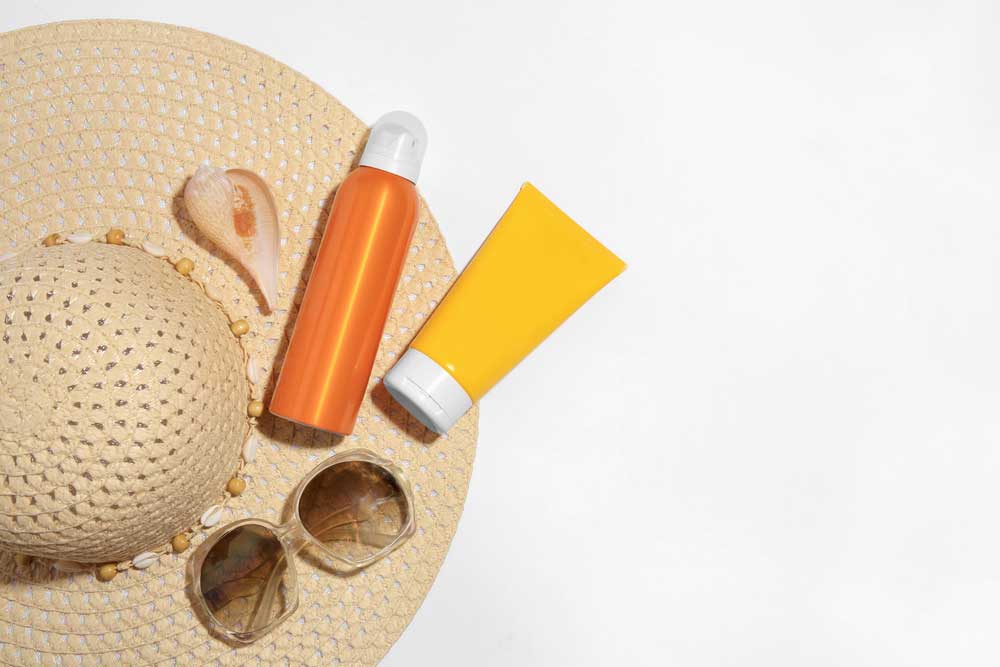
Sunscreen matters, but here is the part people miss: most of us apply far less than the amount tested on the label, which quietly lowers the protection we think we are getting. A broad-spectrum SPF of 30 or higher, applied generously each morning and reapplied after swimming or heavy sweating, does the heavy lifting. Water resistance buys you time, not immunity, so a full afternoon outdoors means going back for another coat every couple of hours. Sunscreen is only one layer, though, and the most dependable strategy stacks several barriers together.
| Protection Layer | What It Does |
| Broad-spectrum SPF 30+ | Filters UVA and UVB rays across exposed skin |
| UPF-rated clothing | Blocks UV physically and never needs reapplying |
| Wide-brim hat | Shades the face, ears and neck where damage collects |
| UV-blocking sunglasses | Guards the eyes and the thin skin around them |
| Shade | Cuts direct exposure during the strongest hours |
Support Your Skin From the Inside and Out
Sunscreen and shade block a great deal, but ultraviolet light still sparks free radicals in the skin, the unstable molecules that wear down collagen and DNA over time. That is where antioxidants earn their place. A vitamin C serum applied in the morning under your sunscreen helps neutralize some of those free radicals, working alongside SPF but not replacing it. Vitamin E and niacinamide play similar supporting roles.
What you eat factors in, too, and the evidence is stronger than most people expect. Carotenoids, the pigments that give tomatoes, watermelon and leafy greens their color, collect in the skin and add a small measure of resistance to UV. In one study, people who ate tomato paste daily for 10 weeks showed 40 percent less sunburn redness than a control group. No one is suggesting a salad in place of sunscreen. Think of a colorful diet as a quiet bonus layer, the kind our Board-Certified Dermatologists are happy to see patients build on top of the basics.
What to Do After Too Much Sun
Even careful people get caught out. If you come home pink, the goal is to calm the skin and help it recover. Cool it with a lukewarm shower, then reach for a gentle moisturizer with hyaluronic acid or ceramides to support the skin barrier while it heals. Hold off on harsh scrubs and strong actives until the redness settles. What counts more than any after-sun product is paying attention in the weeks that follow. A spot that is new, changing, itching or refusing to heal deserves a closer look. Our team can evaluate anything questionable, from an actinic keratosis to a possible skin cancer, and the sooner that happens, the better the outcome tends to be.
Already Seeing Sun Damage? Here Is What Can Help
Prevention protects the skin you have, but if past summers already left their mark, several in-office options can address it. IPL and photofacials target the brown spots and redness left by years of exposure. Laser resurfacing, including devices like HALO and BBL HERO, works on texture, tone and deeper discoloration, while chemical peels lift away sun-damaged surface layers. These treatments are best scheduled for the cooler months, when your skin sees less sun during recovery.
This is where experience counts. AboutSkin is led by Dr. Joel Cohen, a fellowship-trained laser specialist who has been named a Castle Connolly and 5280 Magazine Top Doctor. The clinic also holds a World’s Leading Clinic designation. He has authored more than 324 medical articles and book chapters and taken part in over 100 clinical trials, many of them centered on the lasers and energy-based devices used to treat sun damage.
“The patients who protect their skin daily and treat existing damage in the right season tend to see the best results,” says Dr. Cohen. Many of these treatments work best as a series of sessions rather than a single visit, so plan accordingly, keep your expectations realistic and pair any treatment with steady sun protection.
Outsmart the Colorado Sun This Summer
Peak summer does not have to mean peak damage. With a little planning and the right protection, you can spend the whole season outdoors and still keep your skin in good shape.
Have a spot you want checked, or older damage you would like to address? Reach out to AboutSkin Dermatology and Aesthetics in Greenwood Village, serving the greater Denver area.