By the time the aspens start turning, your skin has quietly logged every patio lunch, trail run and afternoon at the pool. Summer in the Denver area is generous with sunlight, and at a mile above sea level, there is less atmosphere overhead to filter it out. The Skin Cancer Foundation notes that UV exposure climbs roughly four to five percent for every 1,000 feet you gain, which puts Denver around 20 to 25 percent above what someone at the beach gets. Early fall is a good moment to take stock. Here is how to read what the season left behind and how to tell the harmless spots from the ones a dermatologist should see.
What a Summer at Altitude Does to Your Skin
Most sun damage is cumulative and quiet. A single afternoon rarely leaves a mark you would notice, but a whole season adds up, and the higher you live, the faster it accrues. UV rays affect the skin on a few fronts, and by September, you may start to see them show up together.
The usual suspects fall into four buckets. Pigment shifts arrive as new freckles, darker spots or a patchy, uneven tone. Texture changes show up as fine lines and crepey areas, especially across the cheeks and around the eyes. Blood vessels can become more visible, leaving a flush or fine red threads that were not there in May. Then there are rough, scaly patches, which belong in a category of their own.
If you want the fuller picture of how the sun ages skin over the years, our overview of sun damage breaks it down.
Your Post-Summer Skin Audit
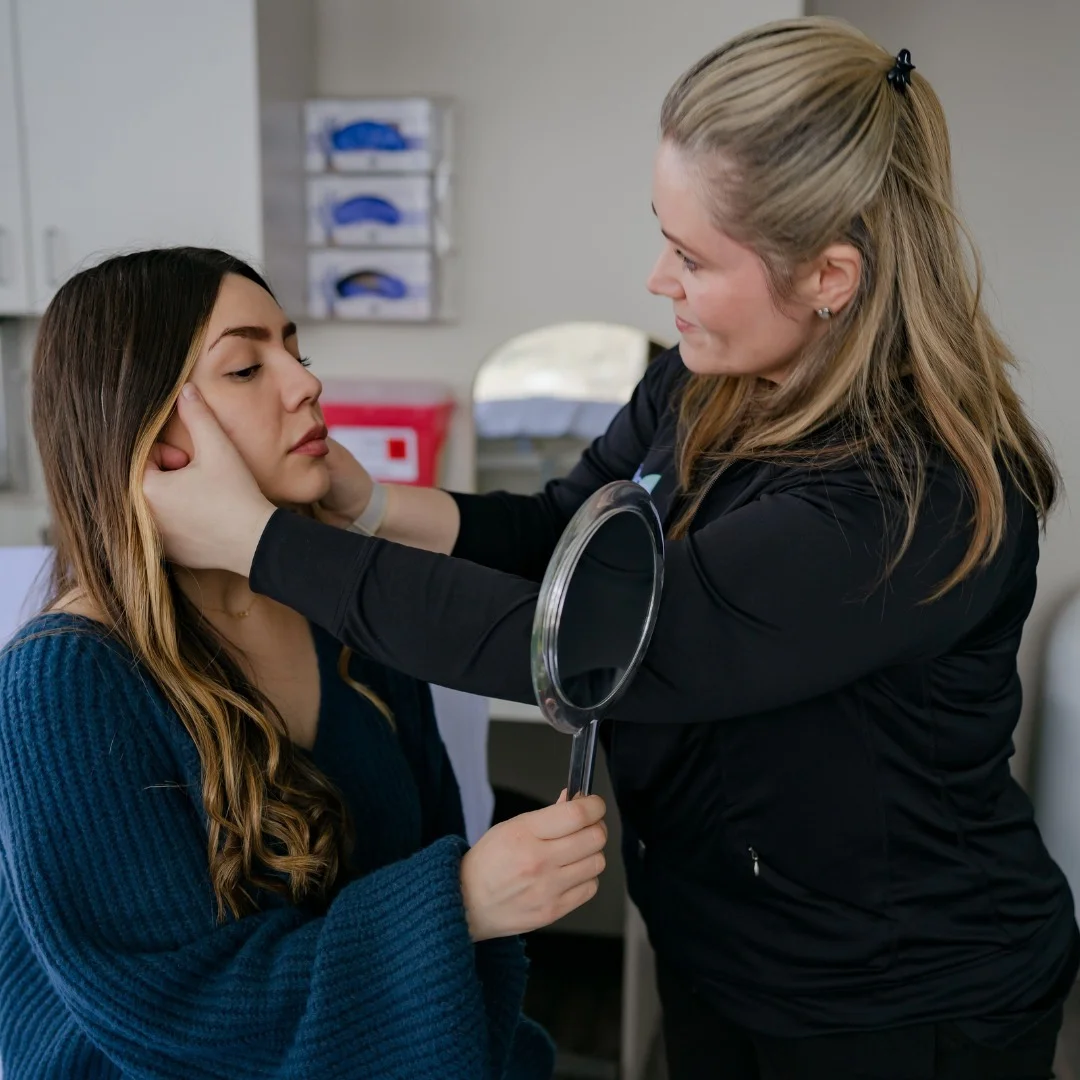
You do not need special equipment for a first look. Stand in good natural light, grab a hand mirror for the spots you cannot see straight on, and compare what you find now to how your skin looked in spring. Give some attention to the back of your neck, your ears, your hands and your chest, since those areas catch a lot of sun and tend to get overlooked. Make a note of anything new or changed so you can point it out later. Photos help too, since a picture from today gives you and your dermatologist something to measure against next spring.
Here is a quick way to sort what you are seeing into the cosmetic column and the get-it-checked column.
| What You’re Noticing | What It Usually Is | Cosmetic or Medical |
| New or darker brown spots | Sun spots and freckles | Cosmetic |
| Uneven tone or dullness | Surface pigment and buildup | Cosmetic |
| Fine lines or crepey texture | Photoaging | Cosmetic |
| Redness or tiny visible vessels | Dilated capillaries | Cosmetic, sometimes rosacea |
| Rough scaly patch you feel more than see | Possible actinic keratosis | Medical, get it checked |
The Spots That Belong to a Dermatologist, Not a Facial
One row on that table is different from the rest. A rough, scaly patch that feels a little like fine sandpaper, and that you can often feel more easily than see, may be an actinic keratosis. These form after years of accumulated sun, and while most never turn into anything, they can progress to squamous cell carcinoma. AboutSkin director Dr. Joel Cohen has written about treating these lesions early as part of preventing nonmelanoma skin cancer, rather than only watching and waiting. A patch that keeps coming back deserves a professional eye instead of a guess at home.
The same goes for any spot that is new after adulthood, changing, bleeding or simply the odd one out. Our guide to annual skin exams covers what to watch for between visits. Dr. Stephen Ho, one of our Board-Certified Dermatologists, volunteers for community skin cancer screenings through the 9Health Fair and the Skin Cancer Foundation, so this kind of check is second nature for the team. Fall, with its softer sun, is a sensible time to book one.
Addressing the Cosmetic Fallout When You Are Ready
The cosmetic column is the fun part, because you have options and no clock ticking. What fits depends on what the summer did to your skin.
For brown spots and uneven tone, light-based treatments like BBL HERO and IPL target the extra pigment, while Q-switched and PicoSecond lasers and chemical peels get there by other routes. For rough texture and fine lines, resurfacing with HALO or microneedling prompts the skin to rebuild collagen over time. For lingering redness and visible vessels, a pulsed dye laser is built to quiet them down. At home, a dermatologist-grade retinoid and vitamin C do steady work on tone and texture, and daily broad-spectrum sunscreen keeps you from giving back the progress.
None of this is one-size-fits-all. Our Board-Certified Dermatologists match the tool to your skin and pigment after a thorough assessment, and many of these treatments are delivered as a short series rather than a single visit. The practice is led by Dr. Cohen, who is fellowship-trained in lasers and a repeat Castle Connolly and 5280 Magazine Top Doctor.
“By fall, a lot of what the summer did is finally on the surface, which makes it a smart time to sort the cosmetic from the medical and handle each on its own terms,” says Dr. Cohen.
Give Your Post-Summer Skin the Debrief It Has Been Waiting For
You earned every minute outdoors this year. Now let your skin catch up. If you spotted a rough patch that needs a closer look or a scatter of freckles you would rather fade, the team at AboutSkin Dermatology and Aesthetics can tell you what you are working with and what fits your needs. Book a visit at our Greenwood Village office, serving the greater Denver area, and start the fall on the right foot.